How Is Vegan Methylcobalamin Manufactured? From Plant-Based Fermentation to Vitamin B12 Tablets
Updated: 3 days ago
Introduction: Is Methylcobalamin Really Vegan?
Vitamin B12 is essential for healthy nerves, red blood cell formation and normal body metabolism. However, unlike many other vitamins, it is not naturally produced by plants or animals. Certain microorganisms are responsible for producing it.
Today, commercial vitamin B12 is commonly manufactured through controlled microbial fermentation. The resulting vitamin B12 can then be processed into different forms, including methylcobalamin.
But how does it become suitable for vegetarians and vegans? The answer lies not only in the fermentation process but also in the nutrients, processing aids and ingredients used throughout manufacturing.
Let's understand how it works.
How Is Vitamin B12 Produced Through Fermentation?
Vitamin B12 production begins with selected microorganisms that naturally synthesise cobalamin.
Some microorganisms used in industrial production include:
- Propionibacterium freudenreichii
- Pseudomonas denitrificans
These microorganisms are grown in controlled fermentation tanks containing essential nutrients.

Plant-Based Fermentation Media: What Do Microorganisms Need?
To produce vitamin B12, microorganisms require a specially prepared nutrient medium.
A vegan-compatible fermentation medium may contain:
Ingredient| Purpose
Plant-derived glucose or sucrose| Energy source
Corn-derived nutrients| Nitrogen and growth factors
Suitable yeast extract| Vitamins and nutrients
Mineral salts| Microbial growth
Magnesium and phosphate| Metabolic functions
Cobalt salts| Essential component of vitamin B12
Cobalt is particularly important because it forms the central mineral component of the vitamin B12 molecule.
Manufacturers seeking vegan-compatible production must avoid animal-derived ingredients such as animal peptones and unsuitable extracts.
How Does Fermentation Work?
The selected microorganisms are introduced into a sterilised nutrient medium inside industrial bioreactors.
Under controlled conditions, they multiply and produce vitamin B12.
The general process involves:
- Preparing the microbial culture.
- Sterilising the nutrient medium.
- Introducing selected microorganisms.
- Controlling temperature, pH and aeration.
- Monitoring vitamin B12 production.
- Harvesting the fermentation broth.
The vitamin B12 is then recovered through suitable extraction, separation and filtration processes.
How Is Methylcobalamin Manufactured From Vitamin B12?
Fermentation produces vitamin B12-containing material, but additional processing is required to obtain the desired commercial form.
Methylcobalamin is a naturally occurring active coenzyme form of vitamin B12. Its distinguishing feature is a methyl group attached to the central cobalt atom.
The conversion process involves three important stages.
Reduction Process
The recovered cobalamin intermediate is brought into a suitable reduced chemical state.
Controlled reaction conditions are important to prepare the molecule for the next stage while minimising unwanted degradation.
Methylation Process
During methylation, a methyl group is introduced at the central cobalt atom, resulting in methylcobalamin.
Manufacturers carefully monitor this reaction to achieve the required identity, purity and quality.
Purification and Crystallisation
After conversion, the material undergoes purification to remove unwanted substances and impurities.
This may involve:
- Filtration and separation.
- Chromatographic purification.
- Concentration.
- Controlled crystallisation.
- Drying and particle-size standardisation.
- Protective packaging.
Methylcobalamin is sensitive to environmental conditions, so appropriate protection against light, heat and moisture is important.
What Makes Pharmaceutical-Grade Methylcobalamin Different?
Not all vitamin B12 raw materials have the same quality specifications.
Pharmaceutical-grade methylcobalamin must meet appropriate quality requirements for its intended use.
Important quality checks include:
- Identity and potency.
- Purity and related substances.
- Residual solvents.
- Heavy metals and elemental impurities.
- Microbial limits.
- Water content.
- Stability testing.
- Batch consistency.
Manufacturers should also maintain GMP documentation, batch records and a Certificate of Analysis (COA).
Industrial Safety and Solvent Requirements
Solvents may be used during extraction, purification and crystallisation.
The ICH Q3C guideline classifies residual solvents into three categories:
Class 1: Solvents that should generally be avoided.
Class 2: Solvents that require strict residual limits.
Class 3: Solvents with lower toxic potential.
Manufacturing facilities must also maintain proper ventilation, protective equipment, solvent storage, fire safety and chemical handling procedures.
The actual solvent selection and permitted residual levels depend on the validated manufacturing process and applicable pharmaceutical standards.
Why Is Fermentation-Derived Methylcobalamin Suitable for Vegans and Vegetarians?
One common misconception is that vitamin B12 must come from animal sources.
In reality, microorganisms produce vitamin B12 naturally. Commercial fermentation can therefore manufacture it without extracting it from animal liver or other animal tissues.
However, there is an important distinction: fermentation-derived does not automatically mean vegan.
To establish vegan suitability, manufacturers should verify:
- Plant-derived or non-animal-derived fermentation nutrients.
- Animal-free processing aids.
- Non-animal-derived carriers and excipients.
- Suitable purification materials.
- No animal-derived ingredients in the final formulation.
This is why raw material documentation and supplier declarations matter.
Methylcobalamin Dosages Available in India – 2.2 mcg to 1500 mcg
Methylcobalamin is available in several strengths in India. The right dosage depends on whether someone needs nutritional supplementation or treatment for an established deficiency.
Dosage| General purpose
2.2 mcg| Approximate daily nutritional reference
500 mcg| Higher-strength supplementation
1000 mcg| High-strength oral supplementation
1500 mcg| High-strength oral supplementation
2000 mcg| High-dose oral replacement in selected clinical situations
Which Dosage Is Better for B12 Deficiency?
A nutritional dose and a deficiency-treatment dose are not the same.
2.2 mcg: Relevant to daily nutritional intake, not a standard deficiency dose.
500 mcg: May be used for supplementation depending on individual requirements.
1000 mcg: Used in certain oral replacement protocols.
1500 mcg: Another high-strength option for clinician-directed supplementation.
For certain malabsorption-related deficiencies, NICE recommends at least 1 mg of oral vitamin B12 daily when oral replacement is prescribed.
Severe deficiency, neurological symptoms or significant absorption problems require medical assessment. In some situations, injections may be preferred.
Vitamin B12 Injections vs Oral vs Sublingual Methylcobalamin – Which Is Better?
Vitamin B12 is available in different delivery forms, each offering different advantages.
Vitamin B12 Injections
Injections are administered intramuscularly and may be recommended for severe deficiency, neurological involvement or certain malabsorption conditions.
They require medical supervision.
Conventional Oral Tablets
Oral tablets are swallowed and absorbed through the digestive system.
High-dose oral B12 can also be absorbed through passive diffusion, making oral replacement effective for many people.
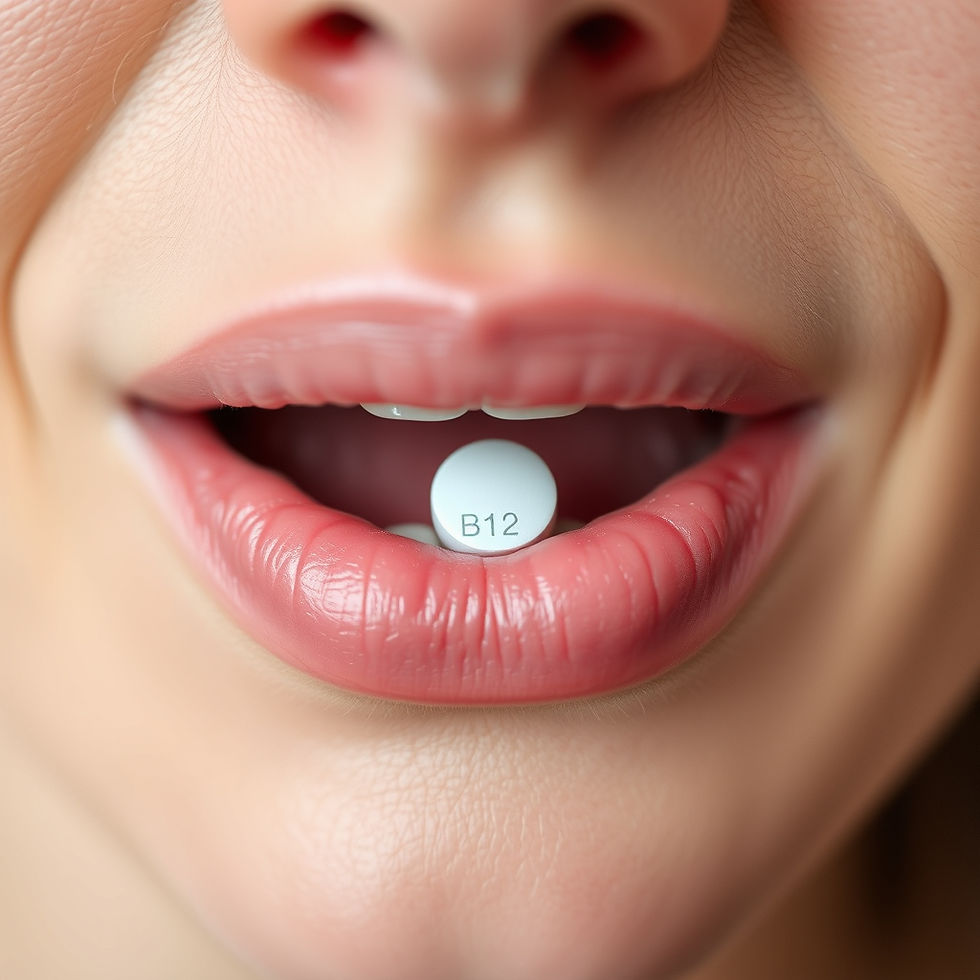
Sublingual Methylcobalamin Tablets
Sublingual tablets are designed to dissolve under the tongue.
They offer practical advantages:
Easy administration.
No need to swallow an intact tablet.
Convenient for daily supplementation.
Available in different strengths, including 500 mcg and 1500 mcg.
However, research has not conclusively established that sublingual B12 is more effective than conventional oral tablets.
So, Which Should You Choose?
Injections may be preferred for selected clinical conditions, while oral and sublingual supplements offer convenient non-invasive options. The appropriate choice depends on deficiency severity, absorption and medical advice.
How to Choose a Good Quality Methylcobalamin Supplement in India?
Before purchasing a vitamin B12 supplement, check more than just its dosage.
Look for:
Clearly mentioned methylcobalamin strength.
Reliable raw material sourcing.
Appropriate purity and potency testing.
GMP manufacturing documentation.
Batch-specific Certificate of Analysis.
Vegan or vegetarian suitability declarations, if required.
Transparent information about tablet ingredients and excipients.
A quality supplement should provide clear information about what it contains and how it is manufactured.
Frequently Asked Questions
Is methylcobalamin naturally produced by plants?
No. Vitamin B12 is produced by specific microorganisms, not plants.
Is vegan vitamin B12 manufactured through fermentation?
Yes. Microbial fermentation can produce vitamin B12 without animal-derived raw materials.
Which bacteria are used to manufacture vitamin B12?
Common industrial examples include Propionibacterium freudenreichii and Pseudomonas denitrificans.
Is all fermentation-derived methylcobalamin vegan?
Not necessarily. Fermentation nutrients, processing aids and final ingredients must also be checked.
Is methylcobalamin better than cyanocobalamin?
They are different forms of vitamin B12. Their suitability depends on individual requirements and clinical circumstances.
Is 1500 mcg methylcobalamin good for deficiency?
It is a high-strength formulation that may be used in selected supplementation or treatment situations under appropriate medical guidance.
Is sublingual methylcobalamin better than oral B12?
Both forms can be effective. There is no conclusive evidence that sublingual administration is universally superior.
When are B12 injections necessary?
They may be recommended for severe deficiency, neurological symptoms or certain conditions affecting absorption.
Conclusion
Methylcobalamin manufacturing combines microbial fermentation, controlled chemical conversion and pharmaceutical quality testing.
The process starts with microorganisms producing vitamin B12 using suitable nutrients. The recovered material is then processed to obtain methylcobalamin, followed by purification and quality testing.
For vegetarians and vegans, the important consideration is ensuring that the complete manufacturing process and final formulation are free from unsuitable animal-derived ingredients.
Understanding raw material quality, dosage and delivery methods helps consumers make better-informed decisions when choosing vitamin B12 supplements.
Scientific References
1. "Vitamin B12 Production Through Microbial Fermentation – Research" (https://pmc.ncbi.nlm.nih.gov/articles/PMC9405231/)
2. "Vitamin B12 Fermentation Research" (https://pmc.ncbi.nlm.nih.gov/articles/PMC11606883/)
3. "ICH Q3C – Residual Solvent Guidelines" (https://database.ich.org/sites/default/files/ICH_Q3C%28R9%29_Guideline_MinorRevision_2024_2024_Approved.pdf)
4. "NIH – Vitamin B12 Health Professional Fact Sheet" (https://ods.od.nih.gov/factsheets/VitaminB12-HealthProfessional/)
5. "NICE – Vitamin B12 Deficiency Guidelines" (https://www.nice.org.uk/guidance/ng239/chapter/Recommendations)
Related Reading from Zynext India
Methylcobalamin 1500 mcg Sublingual Tablets
Disclaimer: This article is for educational purposes only and does not replace professional medical advice, diagnosis or treatment.


Comments