Vitamin B12 vs Methylcobalamin vs Cyanocobalamin Which Form Is Best for Vegetarians
Vitamin B12 is one nutrient vegetarians cannot afford to ignore. It supports red blood cell formation, nerve health, DNA production, energy metabolism, and healthy brain function. Yet the richest natural food sources are mostly animal-based, which makes supplement choice especially important for vegetarian and vegan diets.
The supplement shelf can also be confusing. One bottle says “Vitamin B12”. Another says “methylcobalamin”. A third says “cyanocobalamin”. They all relate to B12, but they are not exactly the same.
This guide compares Vitamin b12 vs methylcobalamin vs cyanocobalamin in clear terms, including how each form works, where it comes from, how it is absorbed, and which one may suit vegetarians best.
This article is for general information only. It does not replace medical advice, diagnosis, or treatment. People with symptoms, pregnancy, chronic illness, or existing deficiency should speak with a qualified healthcare professional.

Vitamin B12 is the nutrient, methylcobalamin and cyanocobalamin are forms of it
Vitamin B12 is the broad name for a family of compounds called cobalamins. These compounds contain cobalt, a mineral at the centre of the B12 molecule.
The body cannot make enough B12 on its own, so it must come from food, fortified foods, or supplements. Once inside the body, B12 helps with:
Making healthy red blood cells
Supporting nerve function
Helping produce DNA
Supporting normal homocysteine metabolism
Reducing tiredness linked to deficiency
Maintaining normal brain and nervous system function
Low B12 can lead to fatigue, weakness, tingling in the hands or feet, mouth ulcers, mood changes, memory issues, and anaemia. In India, low B12 is fairly common among vegetarians because regular diets may include little or no direct B12.
The key point is simple: methylcobalamin and cyanocobalamin are both forms of Vitamin B12. The difference lies in the chemical group attached to the cobalamin molecule.
Form | What it is | Common source | Main strength |
Methylcobalamin | An active form of B12 used directly in some body processes | Often made by microbial fermentation for supplements | Popular for nerve support and active B12 supplementation |
Cyanocobalamin | A synthetic, stable form of B12 | Commonly used in tablets and fortified foods | Stable, widely studied, usually affordable |
Vitamin B12 | The umbrella term for all B12 forms | Foods, fortified foods, supplements | Essential nutrient needed for blood and nerve health |
Vitamin B12 vs Methylcobalamin vs Cyanocobalamin
Both methylcobalamin and cyanocobalamin can help correct B12 deficiency when taken in the right dose and absorbed properly. The difference is what happens after absorption.
Methylcobalamin is already an active form
Methylcobalamin is one of the active forms of B12 used in the body. It plays a role in converting homocysteine into methionine, a process linked with methylation, nerve function, and normal cell activity.
This is why methylcobalamin is often marketed for nerve health. It is commonly used in supplements aimed at people with tingling, numbness, diabetic nerve concerns, or vegetarian B12 deficiency.
Benefits often associated with methylcobalamin include:
Supports normal nerve function
Helps maintain healthy red blood cells
Supports methylation processes
May be preferred by people looking for an active B12 form
Often available as sublingual tablets, capsules, and oral tablets
“Methylcobalamin is active” does not always mean it is automatically better for everyone. The body regulates B12 use through several steps. Dose, consistency, gut health, and deficiency level matter a lot.
Cyanocobalamin must be converted into active B12
Cyanocobalamin is a synthetic form of B12. It contains a cyanide group, which sounds alarming but is present in a tiny amount. For most healthy adults, this amount is considered safe. The body removes the cyanide group and converts cyanocobalamin into active B12 forms, including methylcobalamin and adenosylcobalamin.
Cyanocobalamin is widely used because it is:
Very stable
Usually cost-effective
Easy to formulate in tablets
Common in fortified foods
Well studied for preventing and treating deficiency
People with specific health concerns, such as advanced kidney disease, heavy smoking exposure, or rare issues with cyanide metabolism, should ask a doctor which B12 form is suitable.
Absorption depends more on the person than the label
B12 absorption is more complex than many nutrients.
In food and supplements, B12 must reach the small intestine, where it binds to intrinsic factor, a protein made in the stomach. This helps the body absorb B12 through a specialised pathway. When doses are high, a small amount may also be absorbed passively without intrinsic factor.
That means absorption depends on several factors:
Stomach acid levels
Intrinsic factor production
Gut health
Age
Medicines such as long-term acid reducers or metformin
Whether deficiency is mild or severe
Supplement dose and form
Consistency of intake
Methylcobalamin and cyanocobalamin can both improve B12 levels. Research comparing them does not give a simple “one is always better” answer. Some studies suggest methylcobalamin may stay in tissues differently, while cyanocobalamin has strong evidence and stability. In real life, the best form is often the one a person can take regularly, tolerate well, and afford.
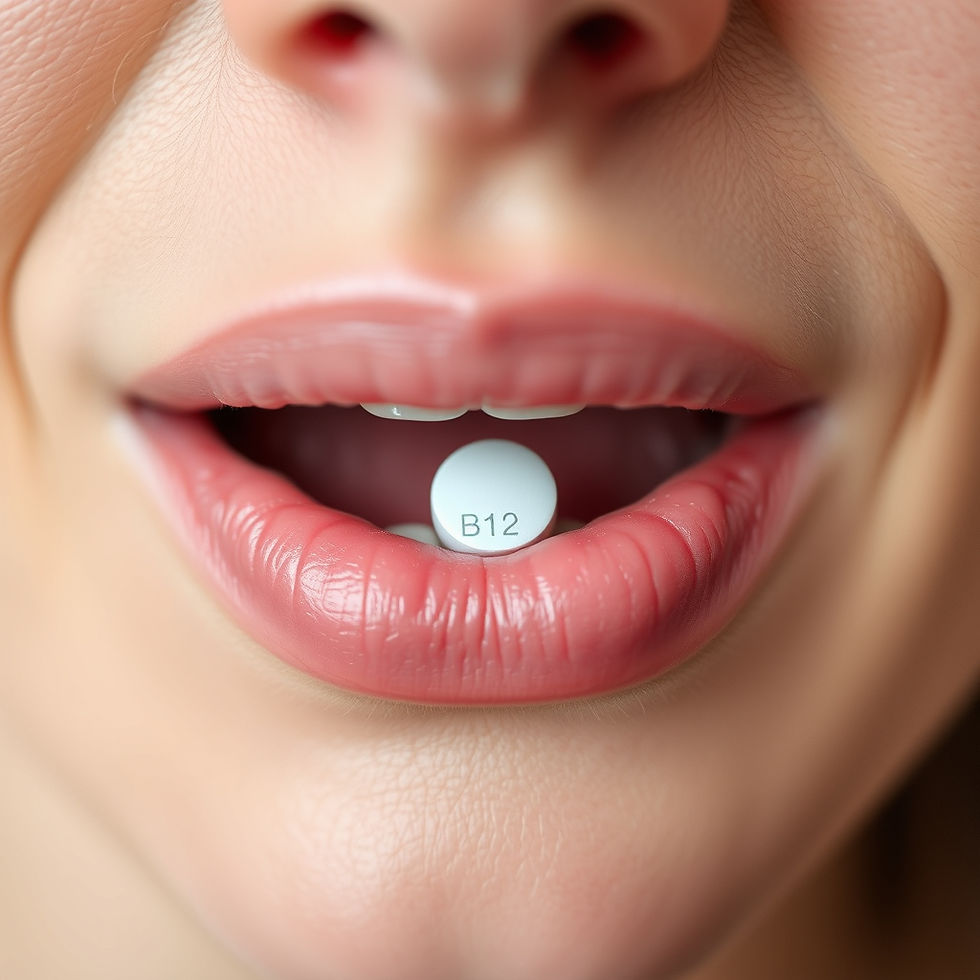
Sublingual tablets may help with convenience
Sublingual B12 tablets dissolve under the tongue. Many people choose them because they are easy to take and do not need swallowing with water. They may be useful for people who dislike capsules or have mild digestive concerns.
That said, much of the benefit still comes from the dose and regular use. Sublingual does not guarantee better absorption for every person, but it can improve adherence, which matters.
Injections are different
B12 injections are usually used when deficiency is severe, symptoms are significant, or absorption through the gut is poor. This decision should be made by a doctor. Oral or sublingual supplements may be enough for many people, but not all.
Vegetarian diets need reliable B12 planning
A common myth is that plant foods naturally provide enough B12. Most plant foods do not contain reliable active B12. Some fermented foods, mushrooms, spirulina, or seaweed may contain B12-like compounds, but these are not dependable enough to treat or prevent deficiency.
For vegetarians in India, dairy can provide some B12, but the amount varies. Milk, curd, paneer, cheese, and fortified foods may help, but they may not meet needs consistently, especially if intake is low.
Eggs contain B12 for ovo-vegetarians, but many Indian vegetarians avoid eggs. Vegan diets need supplements or fortified foods.
Useful dietary sources include:
Milk and curd
Paneer and cheese
Eggs, if included
Fortified breakfast cereals
Fortified plant milks
Fortified nutritional yeast, where available
B12 supplements
For Vegetarian vitamin b12, Vegetarian methylcobalamin, natural vitamin b12 source choices, the practical answer is this: natural B12 is mainly found in animal-derived foods, while vegetarian-friendly supplements are usually made through microbial fermentation and then formulated without animal ingredients.
What makes a B12 supplement vegetarian
A B12 molecule itself is not “vegetarian” or “non-vegetarian” in the way food is. The concern is the full product.
Check for:
No gelatin capsule
Vegetarian tablet or veg capsule
No animal-derived excipients, where clearly stated
Clear label showing methylcobalamin or cyanocobalamin
Reliable dosage information
Suitable certification, if available
Vegetarian methylcobalamin supplements are common. They may be made using fermentation and offered as tablets, capsules, sprays, or sublingual tablets. Always read the full label, not just the front claim.
Who may benefit from each B12 form
There is no single best B12 form for every person. The right choice depends on diet, deficiency risk, symptoms, budget, and medical history.
Methylcobalamin may suit people who want an active B12 form
Methylcobalamin may be a good option for:
Vegetarians with low B12 intake
People looking for an active form of B12
Those focused on nerve support
People who prefer sublingual tablets
People who do not tolerate cyanocobalamin well
It is often chosen for nerve-related symptoms, though symptoms like tingling or numbness need medical evaluation. B12 deficiency can cause nerve problems, but so can diabetes, thyroid disorders, vitamin D deficiency, and other conditions.
Cyanocobalamin may suit people who want a stable and affordable option
Cyanocobalamin may be a good option for:
People looking for a budget-friendly B12
Those using fortified foods
People who want a stable supplement for routine prevention
Those without specific medical reasons to avoid it
People who prefer widely available tablets
For many healthy adults, cyanocobalamin works well when taken regularly. Its stability is a major reason it is used globally.
A general Vitamin B12 supplement may suit people who want simple prevention
Some labels simply say “Vitamin B12” on the front. The form is usually listed in the ingredients panel. This may suit people who want basic support, but the label should still be checked.
Look for the actual form, dosage, and usage instructions. A vague supplement label is not ideal.
How to choose the right B12 supplement
A good B12 choice is not just about the form. It is about matching the supplement to a real need.
Use this simple framework.
Check your diet first
People who eat dairy daily may get some B12, but intake may still be low. Vegans and people who rarely consume dairy should treat B12 as a must-plan nutrient.
A supplement is often the most reliable option for strict vegetarians and vegans.
Choose the form based on your priorities
Pick methylcobalamin if:
Active B12 is preferred
Nerve support is a focus
A vegetarian methylcobalamin tablet is available
The budget allows regular use
Pick cyanocobalamin if:
Cost matters
Stability matters
A fortified food uses it
There is no special reason to avoid it
Look at the dose
B12 supplements often contain doses much higher than the daily requirement because absorption is limited. For example, high-dose tablets may be used for deficiency support or maintenance, depending on the person’s needs.
Do not self-treat severe symptoms with supplements alone. If fatigue, numbness, breathlessness, memory issues, or anaemia are present, testing and medical advice matter.
Check for related nutrients
B12 works closely with folate and iron in red blood cell formation. A person may have more than one deficiency. In India, vitamin D and iron deficiencies are also common, so a complete assessment can help.
Be consistent
B12 levels do not improve well with irregular use. Whether the form is methylcobalamin or cyanocobalamin, consistency matters more than switching brands every few weeks.
For a detailed product-specific guide, including benefits, dosage style, and sublingual use, see this Vitamin B12 1500 mcg tablet guide.
FAQs
Is methylcobalamin better than cyanocobalamin?
Methylcobalamin is an active form of B12, while cyanocobalamin must be converted by the body. That does not mean methylcobalamin is always better. Both can support B12 levels when used correctly. The best choice depends on individual needs, tolerance, and consistency.
Can vegetarians get enough B12 from food alone?
Some vegetarians may get B12 from milk, curd, paneer, cheese, and fortified foods. Many still do not get enough consistently. Strict vegetarians with low dairy intake and vegans usually need fortified foods or supplements.
Is vegetarian methylcobalamin really vegetarian?
It can be, but the full product label matters. The B12 may be made through microbial fermentation, but the capsule or additives could be animal-derived. Look for vegetarian tablets or veg capsules and avoid gelatin if following a vegetarian diet.
What is the best natural Vitamin B12 source?
Reliable natural B12 sources are mostly animal-derived, such as dairy, eggs, fish, meat, and poultry. For vegetarians, dairy is the most common natural dietary option, while fortified foods and supplements offer more dependable intake.
Should B12 be taken daily?
Some products are taken daily, while others may be taken weekly or as advised, depending on the dose and deficiency level. Follow the label or a healthcare professional’s recommendation. People with confirmed deficiency should not guess the dosage.
The takeaway
Vitamin B12 is essential, and vegetarians need to plan for it carefully. Methylcobalamin and cyanocobalamin are both useful forms, but they differ in stability, body conversion, and how people use them.
Methylcobalamin may be preferred by those who want an active B12 form, especially for nerve support or vegetarian methylcobalamin supplementation. Cyanocobalamin remains a stable, commonly used, and affordable form that works well for many people.
The best supplement is the one that fits the diet, health needs, budget, and routine. For vegetarians, the safest approach is to combine sensible food choices with a reliable B12 source, then test levels when needed rather than waiting for symptoms to appear.


Comments